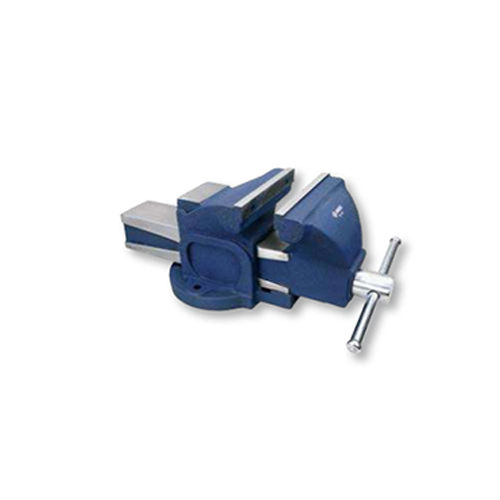
Manufactured from high quality grey
iron castings with excellent shock
absorbing capacity
Hardened jaws 45 (+-) 5 HRC
Unbreakable SG Iron nut
Perfect alignment of main screw and nut reduces wear giving long trouble
free service
Smooth one finger operation
ORDERING INFORMATION
| CAT NR. | JAW WIDTH (INCH) | JAW WIDTH (MM) | JAW OPENING (INCH) | JAW OPENING (MM) | THROAT DEPTH (INCH) | THROAT DEPTH (MM) | NET WT. (KG) | BOX QTY. |
| BV/F/75 | 3 | 75 | 4 | 100 | 2 | 50 | 5.50 | 4 |
| BV/F/100 | 4 | 100 | 5 | 125 | 2.5/32 | 55 | 9.70 | 3 |
| BV/F/125 | 5 | 125 | 6 | 150 | 2.3/4 | 70 | 14.70 | 2 |
| BV/F/150 | 6 | 150 | 7 | 175 | 3.5/32 | 80 | 18.20 | 1 |
| BV/F/200 | 8 | 200 | 8 | 200 | 4 | 100 | 30.40 | 1 |
Sturdy Construction for Demanding TasksBench vices are engineered with strong cast iron to ensure reliability under heavy loads. Their vigorous build withstands the daily rigors of industrial and workshop operations, offering stability while holding various materials in place. The heavy-duty design prevents deformation, making them ideal for repetitive clamping tasks.
Rotating Base for Enhanced VersatilityThe rotating base feature enables users to adjust the angle and position of the workpiece without needing to reposition the vice itself. This increases convenience and versatility, especially for tasks requiring precise manipulation and access from different directions. It's a significant advantage in both machining and assembly operations.
FAQ's of Bench Vices:
Q: How do I operate a bench vice for securing objects during machining tasks?
A: Bench vices operate manually; simply turn the handle to open or close the jaws. Position your workpiece between the jaws and tighten by turning the handle until the object is firmly clamped. Ensure the rotating base is locked in place for maximum steadiness during machining or drilling operations.
Q: What applications are bench vices commonly used for?
A: Bench vices are commonly used in industrial and workshop settings for securely holding objects during machining, drilling, assembly, and general fabrication tasks. Their sturdy clamping ensures precision and safety when working on metal, wood, or other materials.
Q: When should I consider using a heavy-duty bench vice?
A: A heavy-duty bench vice is recommended when working with large, heavy, or hard materials that require stable and secure clamping. Their reinforced construction is ideal for high-force applications, frequent use, or when handling large workpieces in professional workshops and industrial environments.
Q: Where can I purchase bench vices in India?
A: Bench vices are available through authorized manufacturers, distributors, exporters, suppliers, and traders across India. Many industrial supply stores and online platforms offer various sizes, making it convenient to find the right model for your workshop or factory requirements.
Q: What benefits does a rotating base provide in a bench vice?
A: A rotating base allows you to adjust the angle and orientation of your workpiece without unclamping it. This flexibility makes it easier to access different sides or angles during complex machining, assembly, or drilling tasks, improving efficiency and precision in your workflow.
Q: What sizes and materials are available for bench vices?
A: Bench vices come in multiple sizes to accommodate a wide range of clamping needs. They are typically made from sturdy cast iron, chosen for its durability and resistance to wear, making them suitable for demanding industrial and workshop environments.